Healthy Goal Setting
Dream Big, Build Sustainability
My Complicated Relationship With Goals
For a long time, I found goal setting overwhelming. I didn’t understand where to start, how to create goals that felt achievable, or how they were supposed to help.
For years, I honestly felt goal setting was something for fancy, put-together people who already knew exactly where they were going. That didn’t feel like me, so goal setting never felt useful or relevant. I had big dreams don’t get me wrong, but I didn’t know how to turn them into achievable goals.
Over time, I came to understand that goal setting — whether you write things down or simply hold them in your mind — can be incredibly helpful for growth and long-term progress. The problem isn’t goal setting itself. The problem is that most of us are never taught how to do it in a way that actually supports us.
What finally changed things for me was learning to look at goals differently — not as rigid demands or distant outcomes, but as something that can be broken down into smaller, more manageable pieces that support the bigger picture.
Why This Shows Up So Clearly in Dance
I see this pattern constantly with dancers, especially students.
Most all dancers set goals — but those goals are often big, vague, and focused on outcomes. Things like “I want more pirouettes,” “I want more confidence on stage,” or “I want more roles or jobs.” On their own, those aren’t bad goals — but they don’t give a dancer anything concrete to work on day to day.
Without smaller, attainable steps underneath them, big goals can quickly turn into pressure. When progress doesn’t happen right away, dancers tend to become self-critical instead of questioning whether the goal itself was structured in a helpful way.
Discouragement sets in not because the dancer isn’t working hard, but because they’re chasing an outcome without a clear path to get there.
Big Dreams Matter — They Just Can’t Stand Alone
I want to be very clear about this: I believe in dreaming big.
Some people — dancers included — aren’t dreaming big enough. Long-term aspirations give direction to our work, help us stay committed through uncertainty, and fill us with purpose.
But big dreams can’t stand alone.
When a distant outcome becomes the only marker of success, the day-to-day experience can start to feel like constant inadequacy: not there yet, not good enough yet, not close enough yet.
That’s not a motivation problem.
It’s a support problem.
When Goals Become Overwhelming Instead of Helpful
Goals that are too large, too vague, or too far removed from current capacity tend to create the same pattern:
Progress feels invisible
Motivation drops
Confidence quietly erodes
This isn’t a character flaw or a discipline issue.
It’s a goal-design issue.
Research in learning psychology consistently shows that people stay more engaged and resilient when goals are specific, attainable, and paired with regular evidence of progress. Without that feedback, effort starts to feel like pressure rather than growth.
Why Smaller Goals Matter More Than We Think
Short-term, bite-sized goals aren’t a replacement for big dreams — they’re what make big dreams sustainable.
Think of the dream as the destination.
The smaller goals are the stepping stones that make the distance manageable.
Short-term goals help create momentum, provide feedback, and protect confidence.
As a general guideline, if a goal can’t realistically be worked toward and completed within a few weeks or a couple of months, it’s probably too large to stand on its own.
Turning Big Dreams Into Manageable Goals
One of the most useful shifts I’ve learned is this: big dreams don’t need to be abandoned — they need to be translated.
A dream might sound like:
“I want to get more roles.”
“I want to feel more confident in my dancing.”
Those dreams matter. But on their own, they don’t give you anything concrete to work on day to day.
To break a dream down, it can help to ask:
What does this dream actually require?
What part of this is within my control right now?
What is one small, realistic step I could work on in the next few weeks?
That step should feel manageable without being meaningless.
For example, instead of just “I want better turns,” a goal might be:
“I’m focusing on consistent preparation and balance awareness in class this month.”
These kinds of goals don’t replace the dream — they support it.
Let’s break down what actually works ⬇
Tools That Support Healthy Goal Setting
As I’ve learned more about goal setting, I’ve found that having some kind of framework can be incredibly helpful — not to create rigid rules, but to give structure to ideas that otherwise feel overwhelming.
There are a few models I return to because they encourage clarity without pressure:
SMART goals, which help shape a goal so it’s specific, realistic, and grounded in a timeframe
The GROW model, which focuses on understanding your current reality and identifying a clear, manageable way forward
The HEART model, which brings the focus back to meaning — making sure a goal aligns with your values, your life, and who you’re becoming
To support this approach, I’ve created two optional worksheets that walk through these models in a calm, flexible way. They’re meant to be used as tools — not checklists — and can be revisited or adapted as your goals evolve.
Personal Goal Builder (SMART + HEART) - Click here for worksheet
Helps connect why a goal matters with how to shape it in a realistic, supportive way.
GROW Goal Action Planner - Click here for worksheet
Focuses on translating intention into action by identifying a clear, manageable next step.
Use them if they feel helpful. Skip them if they don’t.
The goal is clarity — not perfection.
Keeping Goals Flexible When Things Don’t Go as Planned
Another essential part of healthy goal-setting is flexibility.
Progress rarely moves in a straight line. Schedules change. Bodies get tired. Motivation fluctuates. None of that means the goal has failed.
When things stall, it can help to pause and ask:
Does this goal need adjusting — or do my expectations?
What’s still working?
What feels unsustainable right now?
Adjusting a goal isn’t quitting.
It’s responding intelligently to new information.
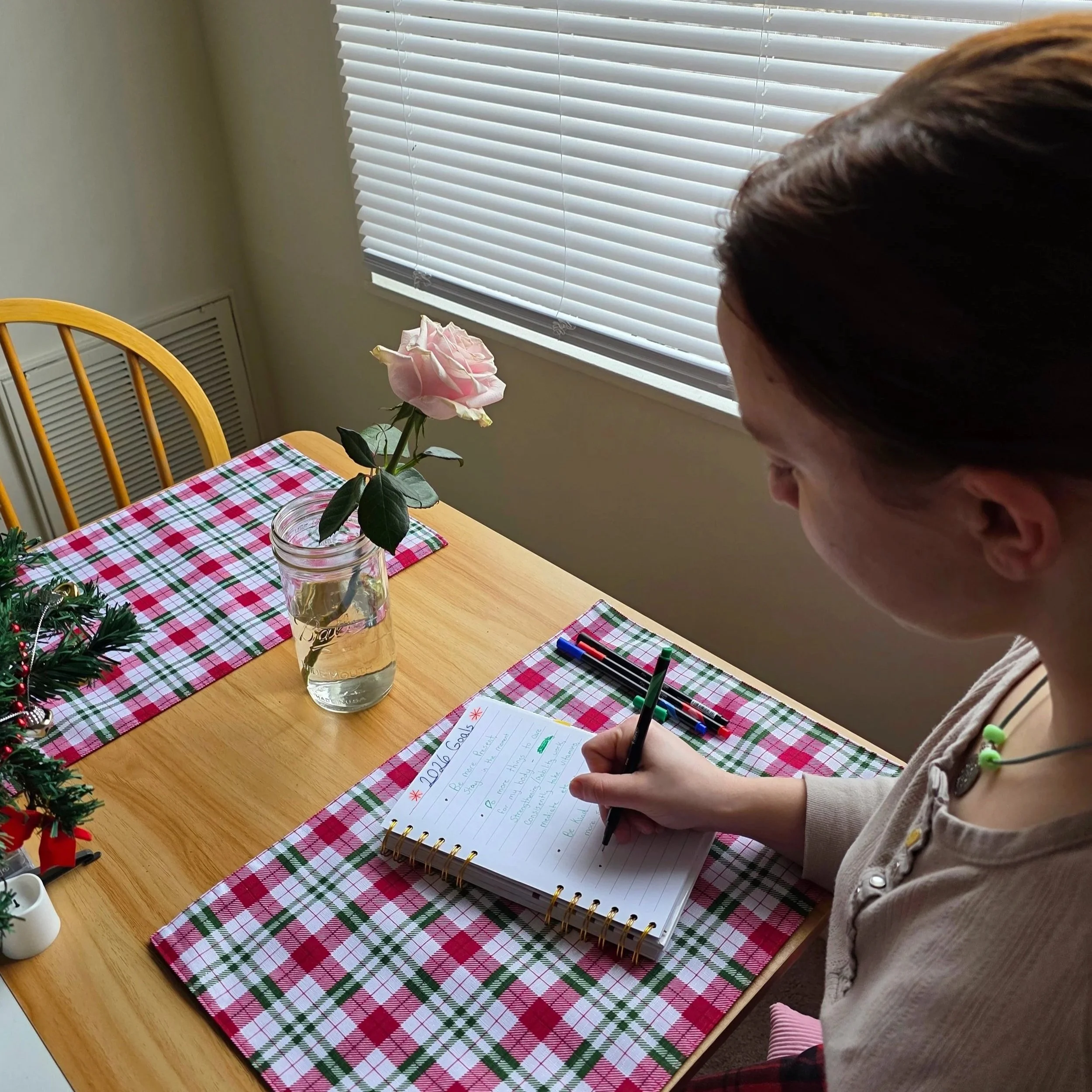
Reflection doesn’t have to be perfect — it just has to be honest.
Writing Goals Down (Without Turning It Into a Chore)
Writing goals down can increase clarity and follow-through. Translating an intention into words often makes it feel more real and anchored.
That said, reflection doesn’t have to look the same for everyone.
Journaling can be helpful — especially when it focuses on effort, progress, and what’s going well. It should not become a space for self-criticism or constant evaluation.
And it’s worth saying clearly: journaling is optional.
Reflection can take many forms — mental check-ins, conversations, meditation, structured planning, or occasional notes when something clicks. The method matters far less than the awareness.
In Closing
I didn’t always understand how to set goals in a way that felt supportive. For a long time, they felt overwhelming rather than helpful.
What I’ve learned — and what I now try to pass along — is that goals don’t need to be rigid or punishing to be effective. When big dreams are supported by smaller, realistic steps, growth becomes something you can engage with steadily rather than something you’re constantly chasing.
Dream big.
Just make sure the goals underneath those dreams are built to support you — not quietly wear you down.
